

Readers will know that industrial property is a part of my work that I enjoy very much. So when a freehold industrial project launches in MacPherson, I pay close attention.
Generations @ Tannery sold out completely. All 54 production units and all five canteen units were taken up by 4pm on 17 July 2026, its public launch day.
Let me be upfront at the start, because I do not want to waste your time : there are no units left from the developer. If you came here hoping to buy one, I am sorry. But I still think this sell-out is worth understanding, because it tells us a great deal about where the industrial market is heading — and that matters whether you own industrial space, rent it, or are thinking about buying some day.
What actually happened
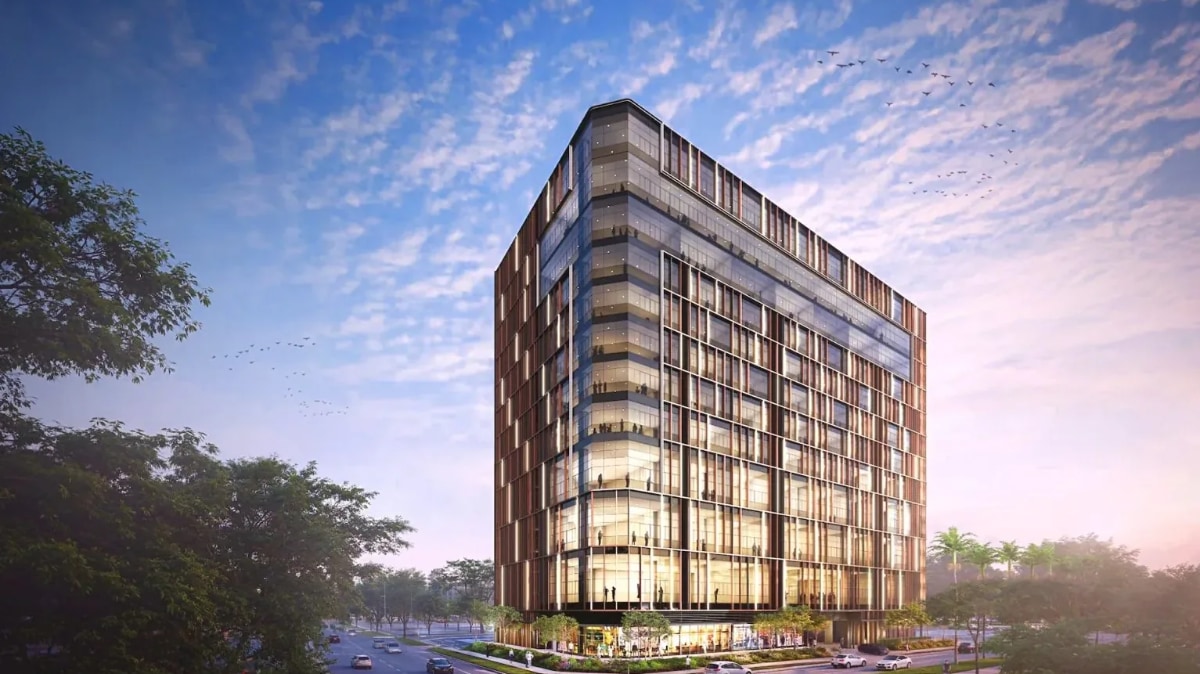
The project sits at 71 Tannery Lane in MacPherson, a redevelopment of the former City Industrial Building, about a four-minute walk from Mattar MRT on the Downtown Line. It is a 12-storey B1 light industrial development by Providence Estates, with completion expected around early 2029.
Here is how the sale went, and the sequence is the interesting part.
(1) Sales opened on 16 July, a day before the public launch, but only to buyers committing to a minimum of SEVEN units, or to whole-floor buyers.
(2) The top four floors had already been reserved before the launch, so only 50 of the 54 production units ever reached the market.
(3) By the time the multiple-unit buyers had taken their pick, just five production units and five canteen units were left for the general public.
(4) Those went on 17 July. Sold out by 4pm.
About 90% of buyers were multiple-unit purchasers. And roughly 80% were end-users — mostly SMEs looking to base their operations or headquarters in the building, from industries as varied as marine solutions, media and imaging, interior design, construction and high-tech manufacturing.
So this was not a speculative frenzy. This was businesses buying their own premises, in bulk.
The numbers
Production units ranged from 1,658 to 2,695 sq ft, spread from the second to the twelfth floor, with each floorplate around 20,000 sq ft holding up to 10 units. Ceiling heights go up to 6.125m in the double-volume units, with column-free layouts.
On pricing, units went from about $1,500 psf on the eighth floor up to $2,000 psf on the second. In industrial buildings the lower floors are the premium ones — the opposite of residential, which surprises a lot of people. The exclusive “Towkay units” on the second level started from $2.6 million.
The five canteen units on the ground floor were priced between $3,000 and $4,000 psf. The smallest, at 463 sq ft, transacted somewhere between $1.4 million and $1.85 million.
So why did it go so fast?
A few reasons, and I think it is worth separating the genuine ones from the hype.
Freehold is genuinely scarce. This is the real driver. Most government land sales industrial sites are zoned B2 with only 30-year leases. A freehold B1 parcel is unusual, and buyers know it. Huttons’ data shows 999-year and freehold multi-user factory units made up 16.5% of sales so far in 2026, up 4.3 percentage points from 2022. The price gap between freehold and leasehold has widened to $488 psf in 2026, from $391 psf back in 2020.
If you have read my piece on what lease decay really means, you will recognise the logic immediately. A 30-year industrial lease starts eating itself almost from day one. Freehold does not.
The location works for staff, not just lorries. Four minutes to an MRT station matters more than it used to. Businesses now compete for staff, and an industrial address that people can actually commute to without a car has become a hiring advantage.
It was not really sold to the public. Let us be honest about this one. With the top four floors reserved and a seven-unit minimum on the first day, the general public was competing for five units. A two-day sell-out sounds dramatic, but the structure of the sale made it close to inevitable.
The wider market is firm. My summary of the Q2 2026 industrial report showed rents rising for 23 straight quarters and occupancy holding at 89.1%. Demand for well-located industrial space is real, not manufactured.
What I would want you to take from this
I have sold industrial property, including a B1 unit that achieved the highest PSF in its building after six months of persistent work. So let me offer some honest thoughts rather than excitement.
A sell-out tells you about the launch, not about your exit. Buying in a hot launch is easy. Selling six years later to one specific buyer who needs that exact size, in that exact location, with that exact ceiling height — that is the harder part. Industrial buyers are fewer and fussier than residential buyers. Please do not assume a quick sell-out guarantees a quick resale.
Industrial has its own stamp duty, and people forget it. Industrial property carries a Seller’s Stamp Duty of 15% if you sell within the first year, 10% in the second, and 5% in the third, with nothing payable after three years. It is a different schedule from residential, and I have met buyers who assumed industrial had no SSD at all.
The financing is a different animal. You cannot use CPF for industrial property. Loan tenures and margins differ from residential, and GST can apply where the seller is GST-registered. None of this is a problem — it just needs to be worked out BEFORE you commit, not after. Speak to your banker early.
Check the permitted use before you fall in love with a unit. B1 comes with rules on what activities are allowed and on the proportion of ancillary office space. A beautiful unit that cannot legally house your operations is not a bargain.
Pro-tip : if you are buying industrial for rental income, ask who your realistic tenant is before you ask what the yield looks like on paper. A yield assumes a tenant. Find the tenant first, at least in your own mind.
If you missed it
There will be other projects. Freehold ones will stay rare, which is rather the point, but the city-fringe industrial belt around MacPherson, Tai Seng and Ubi remains active, and resale units in existing buildings come up regularly — often at more sensible entry prices than a launch.
And when Generations @ Tannery completes around 2029, there will be owners looking for tenants, and some looking to sell. That is a market I will be watching closely for my clients.
If you own industrial space and would like to understand what it is worth today, or you are considering buying into this segment and want someone to talk you through the practical side honestly, do drop me a message. I am happy to tell you when something is not a good fit for you. That is part of the job too.
Details of the launch are based on reporting by EdgeProp Singapore dated 17 July 2026. Prices and specifications are as reported at the time of launch. This article is general information and not investment advice — please do your own checks with the relevant authorities, your banker and your lawyer.
