
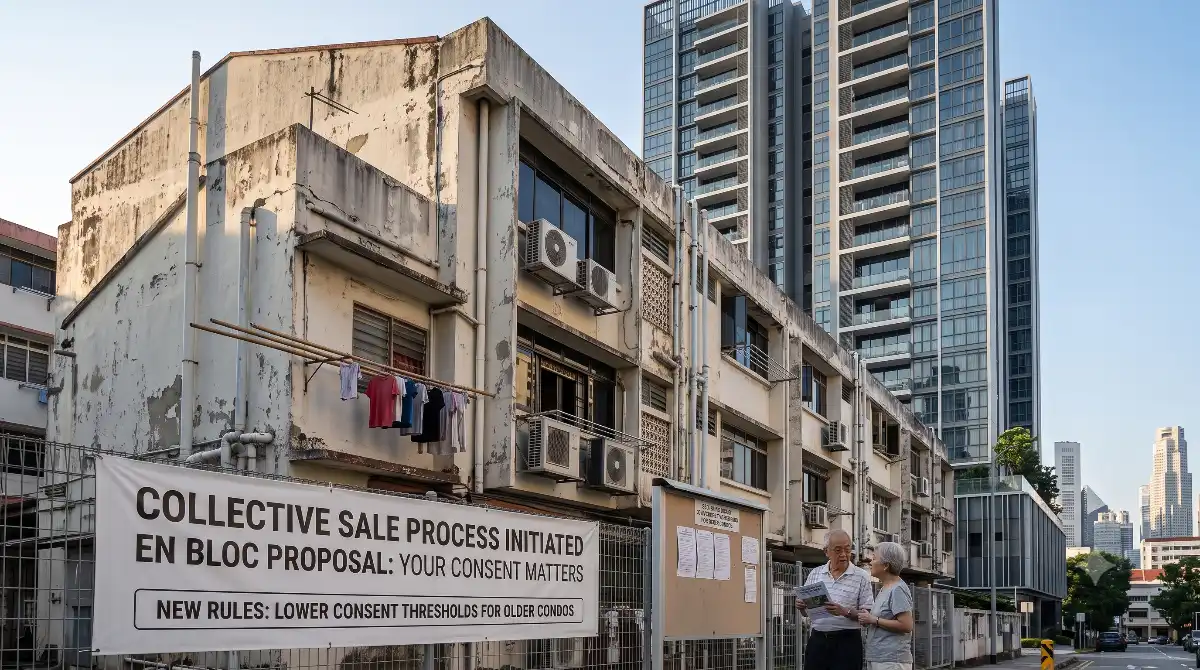

This week, a piece of property news that many owners of older condos have been waiting for. On 4th August 2026, the Government introduced the Land Titles (Strata) (Amendment) Bill in Parliament, which proposes to lower the consent thresholds for collective (en bloc) sales of older private residential developments.
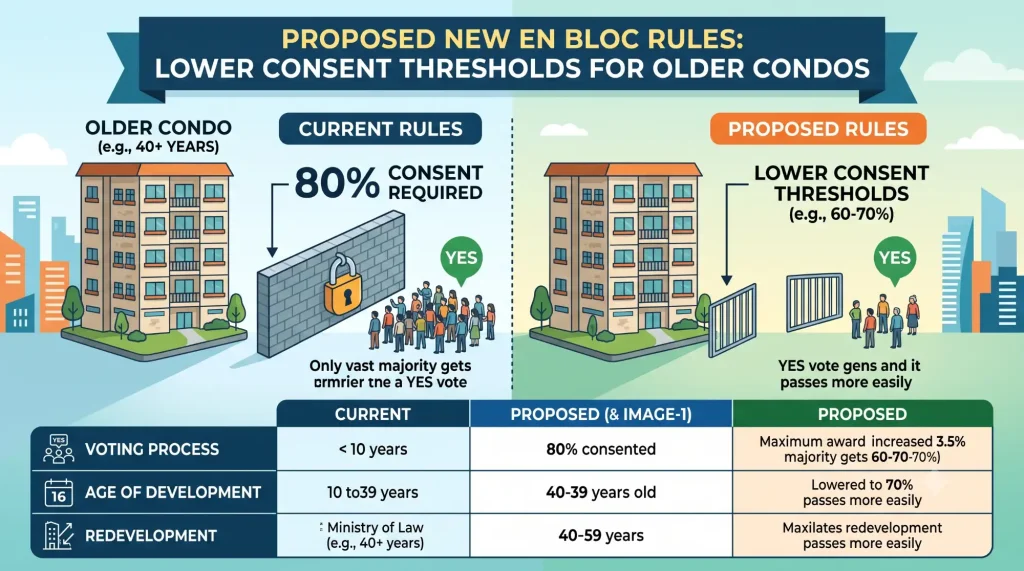
Let me share the key facts simply, so you know what is being proposed and what it may mean for you.
What are the proposed new thresholds ?
Today, an en bloc sale requires 80% of owners (by share value and strata area) to agree, for developments 10 years and older. Under the proposed changes :
| Age of Development | Current Consent Required | Proposed Consent Required |
|---|---|---|
| Less than 10 years | 90% | 90% (no change) |
| 10 to 39 years | 80% | 80% (no change) |
| 40 to 59 years | 80% | 70% |
| 60 years and above | 80% | 65% |
The thresholds for newer developments remain unchanged. The lower thresholds apply only to older developments, where maintenance costs and major repair works tend to become heavier over the years.
Why is this being proposed ?
The current consent thresholds have been largely unchanged since 1999. Meanwhile, our private housing stock is getting older. According to the Ministry of Law, about 20,000 private non-landed homes are already more than 40 years old today, and many more will cross that mark in the coming decades.
The intention is to give ageing developments a more practical path to redevelopment when a clear majority of owners supports a sale.
Safeguards for owners who do not wish to sell
The Bill also proposes stronger protections for owners who prefer to stay. These include :
(1) Higher support needed to start — 35% of owners (by share value or number of units) must support the formation of a Collective Sale Committee, higher than today’s requirement.
(2) Less time to collect signatures — six months instead of twelve, to reduce prolonged pressure on owners.
(3) Longer cooling-off period — if an en bloc attempt fails, owners must wait three years (instead of two) before trying again.
(4) Higher compensation for successful objectors — the courts may award a larger amount from the sale proceeds to owners whose objections are upheld.
Will ongoing en bloc projects be affected ?
Projects that have already secured their first owner signature will continue under the existing rules. Projects that have not yet started collecting signatures may come under the new framework once it takes effect.
What happens next ?
This is still a proposal. The Bill has only had its First Reading in Parliament and will be debated at a future sitting. If passed, the changes will take effect on a date to be announced.
If you are staying in an older condo and wondering how these proposed changes may affect your own plans — whether you hope for an en bloc, or you prefer to stay put — do feel free to reach out to me for a chat. I am happy to help you understand your options, whichever side of the fence you are on.
Or follow my blog posts on the latest Singapore property and real estate news 😊
