
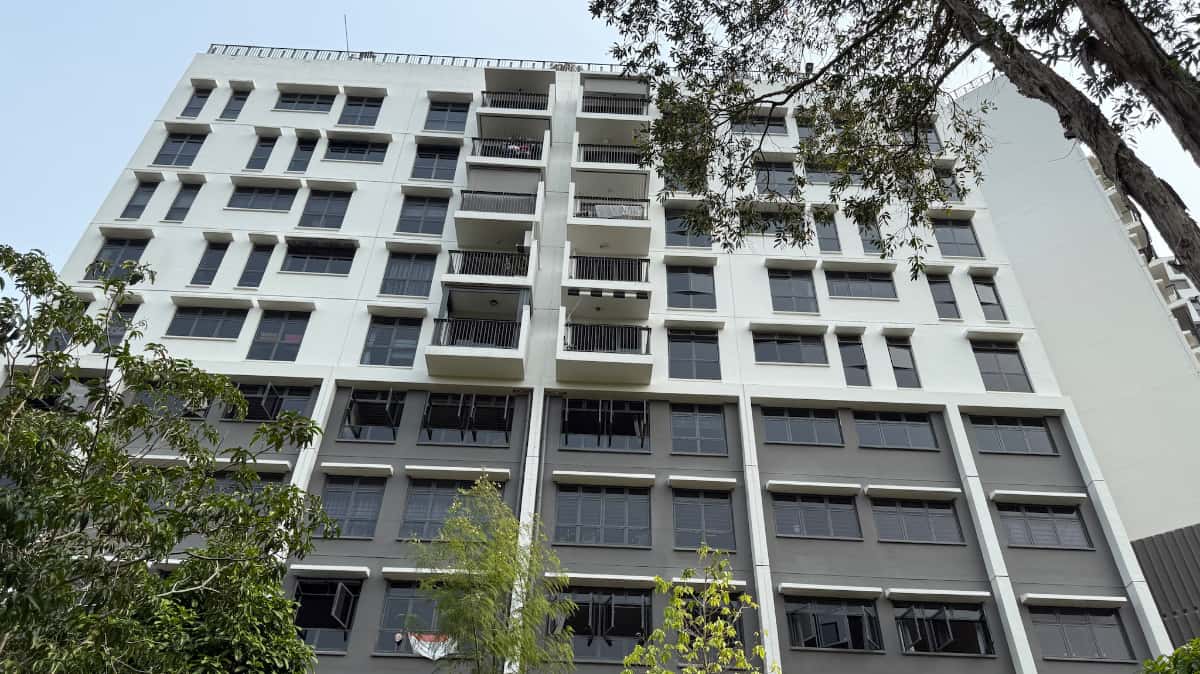

“Calin, I’m moving overseas for work. Can I just rent out my flat?”
“We’ve bought our new condo. Should we sell the old place, or keep it and collect rent?”
I hear some version of this every few weeks. And I understand the appeal. Rent comes in every month, the property keeps its value, and you don’t have to make a big decision about selling just yet.
But renting out your home for the first time is not as simple as putting up a listing and handing over the keys. There are rules from HDB or URA, a stamp duty deadline, a property tax change that surprises almost everyone, and a legal duty to check who is actually living in your home.
None of it is difficult. It just needs to be done in the right order. So here is the checklist I walk my landlords through.
Step 1 : Check that you are allowed to rent out your property
If you own an HDB flat, the rules are strict, and they come first.
(1) Only Singapore Citizen owners can rent out the WHOLE flat. If you are a Singapore PR owner, you can rent out spare bedrooms but not the entire flat.
(2) You must have completed your Minimum Occupation Period, which is 5 years for most flats. If ownership was transferred to you (for example after a death in the family or a divorce), the MOP is usually counted again from the date of transfer. I explained this in my guide to inheriting an HDB flat, because it catches many families off guard.
(3) Prime and Plus flats can NEVER be rented out as a whole flat, even after their 10-year MOP. Please don’t buy one thinking you’ll rent it out later.
(4) Check the Non-Citizen Quota BEFORE you start marketing. If your block (11%) or neighbourhood (8%) has reached its quota, you can only rent the whole flat to Singaporeans and Malaysians. Imagine finding a lovely expat family, only to discover you are not allowed to rent to them. You can check the quota on HDB’s website in two minutes. Do it first.
If you own a private condo or landed home, there is no approval to apply for, but there are still two URA rules.
(1) Every occupant must stay at least three consecutive months. Daily or weekly rentals (yes, that includes Airbnb) are not allowed.
(2) There is a cap of six unrelated persons per property. If your home is at least 90 sqm, you can register with URA ($20 fee) to accommodate up to eight, under a temporary relaxation that now runs until 31 December 2028.
Also check your condo’s MCST by-laws, as some developments have their own rules about tenants. And if you own an Executive Condominium, you cannot rent out the whole unit until it has met its MOP.
Step 2 : Know the HDB rental rules before you agree on a lease
This is where first-time HDB landlords make honest mistakes, so please read slowly.
(1) The minimum rental period is 6 months. No short stays.
(2) The maximum period per approval is 3 years if all your tenants are Singaporeans or Malaysians, and 2 years if even one tenant is a non-Malaysian non-citizen. You must reapply every time you renew.
(3) You must get HDB’s approval BEFORE the tenancy starts, through the MyHDB page or app. The fee is $18.
(4) The maximum number of tenants is 4 for a 1- or 2-room flat, 6 for a 3-room flat and 8 for a 4-room or bigger flat. That last figure goes back to 6 for any rental period beyond 31 December 2028, so keep it in mind if you are signing a longer lease. The cap doesn’t apply if all your tenants are from the same family.
(5) If a tenant moves out or changes, you must tell HDB within 7 days. A new tenant needs HDB’s approval before moving in.
Pro-tip : Tenants of an HDB flat generally cannot own another HDB flat. One exception is a divorced or legally separated owner, and only one of the two parties can rent. I see this situation more often than you’d think, so if your prospective tenant is going through a separation, it is worth a gentle question. (If you are the one going through it, my guide on what happens to your property in a divorce may help.)
Step 3 : Screen your tenant properly (this part is the law, not just good sense)
I always tell my landlords: the most important decision is not the rent. It is the PERSON.
For foreign tenants, you have a legal duty under the Immigration Act to make sure they are not illegal immigrants or overstayers. ICA calls this doing your “HOME work”:
(1) CHECK that the tenant’s original work pass or immigration pass is valid. You can verify work passes on MOM’s website and Student Passes or Long-Term Visit Passes on ICA’s website.
(2) COMPARE the person in front of you with the photo on the original pass and passport. Photocopies are not enough.
(3) Keep checking during the lease, especially when a pass is close to expiry.
The penalty for harbouring an immigration offender is up to 2 years’ jail and a fine of up to $6,000. “I didn’t know” is not a defence.
For HDB flats there are extra conditions. A non-citizen tenant’s pass must be valid for at least 6 months when you apply, tourists cannot rent HDB flats at all, and Work Permit holders from the construction, manufacturing, marine and process sectors must be Malaysian.
Beyond the legal checks, I also ask the human questions. What do they do? Who will actually live there? Why are they moving? Most tenants are lovely people. But a five-minute conversation tells you a lot, and I would rather spend that time now than spend months chasing rent later.
Step 4 : Get the tenancy agreement right
A good tenancy agreement protects BOTH sides. These are the clauses I pay the most attention to.
The diplomatic clause. This lets an expat tenant end the lease early if their employer relocates them out of Singapore or they lose their job. It usually applies only after the first 12 months of a 2-year lease, with 2 months’ written notice, and the tenant normally reimburses part of the agent’s commission. It is standard in Singapore, and most corporate tenants will ask for it. Just make sure it is written precisely, with proof of relocation required.
The security deposit. The market norm is one month’s rent for each year of the lease. It covers damage and unpaid rent, not normal wear and tear.
The minor repair clause. Tenants usually pay for small repairs up to an agreed amount each time, often $150 to $200, and the landlord covers anything bigger. Write the figure down. Vague wording is where most landlord–tenant arguments begin.
Aircon servicing, pets, and who pays the utilities. Small things, but put them in writing too.
Pro-tip : Take dated photos and a video of every room on handover day, and have both parties sign the inventory list. When the tenant moves out in two years, nobody remembers whether that scratch was already on the floor. Photos remember. 🙂
Step 5 : Stamp the tenancy agreement on time
Tenancy agreements in Singapore attract stamp duty. The rate is 0.4% of the total rent for a lease of up to 4 years. On a 2-year lease at $3,000 a month, that is 0.4% x $72,000 = $288.
The tenant usually pays this, as set out in the agreement, but it is in everyone’s interest that it is done properly. The deadline is 14 days after signing (or 30 days after receiving the document in Singapore, if it was signed overseas). Late stamping attracts penalties, and an unstamped agreement is much harder to rely on if there is ever a dispute.
There is a nice bonus here. When the agreement is stamped through IRAS’s myTax Portal, IRAS is automatically told about the rental for property tax. Otherwise, you must inform IRAS yourself within 15 days of the letting, and the fine for not doing so is up to $5,000.
Step 6 : Plan for the property tax and income tax on your rental property in Singapore
This is the part that genuinely surprises my clients.
Your property tax goes up, a lot. Once you rent out the whole property, you lose the lower owner-occupier tax rates from the date of letting. Non-owner-occupier rates start at 12% of the Annual Value and climb progressively to 36%.
To give you a sense of scale, IRAS’s own example uses a 4-room HDB flat with an Annual Value of $16,020. Owner-occupied, the tax is $160.80 a year. Rented out, it is $1,922.40. That is about TWELVE times more. Please put it in your sums before you decide that renting beats selling.
(If you rent out a room while still living in the home yourself, you keep the owner-occupier rates.)
Your rent is taxable income. You declare it in your annual income tax return. IRAS pre-fills deemed expenses of 15% of the gross rent, and you can claim the mortgage interest on the property on top of that. Or you can claim your actual expenses instead, if you have kept the receipts.
Step 7 : If you will be overseas, appoint someone you trust
Many of my landlords are renting out precisely because they are moving abroad. For an HDB flat, HDB requires you to appoint an attorney to manage the flat while you are away, using a Power of Attorney lodged with the High Court. Your attorney cannot be one of your tenants.
Even for a condo, you’ll want someone on the ground to handle the leaking pipe at 11pm, the aircon that stops working, and the end-of-lease handover. I have looked after properties for overseas owners for years, and the ones who sleep best are those who arranged this BEFORE they flew off. Some of them eventually decide to sell from overseas too. That is very doable, as I described in this story.
Should you rent out your property in Singapore, or sell it?
Here is my honest view. Renting out is a wonderful option when (1) you are coming back, or (2) the numbers truly work after the higher property tax, income tax, maintenance and the odd vacant month between tenants.
It is less wonderful when you are keeping the old home mainly because you can’t bear to decide. If you are upgrading and still torn, my article on whether to sell first or buy first walks through the ABSD side of keeping two properties, which is often the deciding factor.
Your first-time landlord checklist, in one place
(1) Confirm you are eligible: MOP met, SC owner for an HDB flat, not a Prime or Plus flat, EC past MOP.
(2) Check the HDB Non-Citizen Quota or your condo by-laws.
(3) Check the minimum stay (6 months for HDB, 3 months for private) and the occupancy cap.
(4) Screen the tenant: CHECK the pass, COMPARE the person, keep checking.
(5) Get HDB approval before the tenancy starts ($18).
(6) Sign a clear tenancy agreement covering the diplomatic clause, deposit, minor repairs and inventory.
(7) Stamp it within 14 days.
(8) Budget for higher property tax and declare the rent as income.
(9) Appoint an attorney or caretaker if you will be overseas.
(10) Diary the renewal date, because every HDB renewal is a new application.
Thinking of renting out your property? Let’s talk it through
Renting out your home is a big step, especially the first time. There are many rules, and the consequences of getting one wrong (an unauthorised HDB rental, an overstayer tenant) are much bigger than the effort of getting it right.
If you would like help finding the right tenant, checking your numbers, or deciding between renting and selling, do drop me a message. No hard selling, I promise. Sometimes the best advice I can give is “keep living in it”. You can also read what my clients say about working with me.
Rules in this article are correct as at October 2026, based on HDB, URA, IRAS and ICA information. Rental regulations, occupancy caps and tax rates change from time to time, so please confirm your own position with the relevant agency before signing a tenancy. This article is general information and not legal or tax advice.
